Iron ore pellet
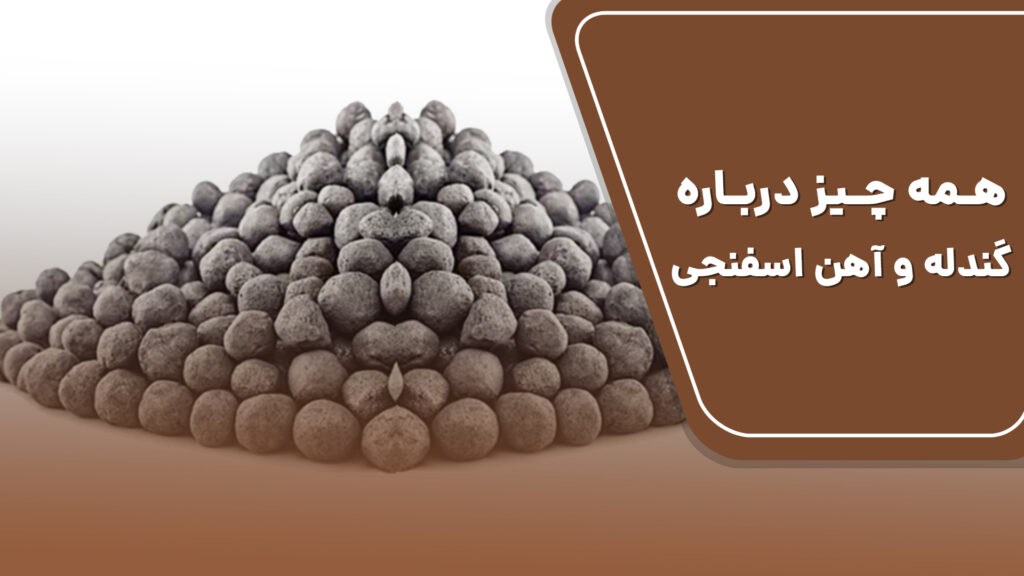
Pelletizing is a process that converts fine particles of raw materials (concentrate) into dense, compact agglomerates. Pellets are the final product of the pelletizing process and serve as a key feedstock for hot metal production in blast furnaces and for sponge iron production through various direct reduction methods.
Pelletizing Methods
In general, pellets are produced using two main methods
Cone (Rotary Drum)
Disc Pelletizer
The main raw material for producing iron ore pellets is iron ore concentrate, and the particle size of the concentrate used should be below 45 microm. Additives and binders such as bentonite, hydrated lime (lime slurry), organic materials, lime, cement, and water are also used in the process.
Direct Reduced Iron (DRI)
Sponge iron, also known as porous pellets, is produced through the direct reduction of iron ore pellets and has a high grade, typically ranging from 34% to 95%. The direct reduction process removes oxygen from the iron ore and converts it into a porous, sponge-like structure—hence the name “sponge iron.”
It is usually produced in lump or pellet form. In addition, it can be produced in a compacted form known as briquettes, called Hot Briquetted Iron (HBI).
Applications of Direct Reduced Iron (DRI)
Direct Reduced Iron (DRI), also known as sponge iron, has many applications. Its most important use is as a substitute for steel scrap in induction furnaces, where it is used to produce billets and other steel products. In these furnaces, up to 50% of the charge can consist of DRI in place of scrap.