
Steel beam

Steel I-beams are among the most important steel products and are widely used in construction and industrial projects. With their long section and high strength, they are used in structural design to carry loads. In fact, I-beams are used in building frames and play a key role in the structural resistance of a project. This product is manufactured in various types and sizes, each designed for specific applications. An I-beam has two main parts: the central web and the flanges on either sideTypes of I-BeamsBased on their standards, I-beams are classified into different types:IPE I-beam:This type of beam is manufactured in accordance with European and Iranian standards and is produced in an I-shaped cross-section. The flanges of this I-beam have a constant, uniform thickness along the entire length of the product. I-section(IPB):This type has two wide, broad flanges and is produced in two versions: light and heavy. The heavy type is designated with the letter L, and the light type with the letter V. Medium-flange(INP) :This type is manufactured in accordance with Russian and Chinese standards and is produced using the hot-rolling process. The beam has an I-shaped profile, and the flange thickness decreases as it extends away from the web. In terms of application and shape, I-beams can also be classified as follows:Wide-flange (H-shaped) Abbreviation: IPE European standard: Standard I-beam Castellated beam: Features openings in the web Light I-beam A light H-beam is a type of open steel section that has two wide flanges and a central web. Heavy I-beam The heavy H-beam is the heaviest type of beam and offers very high strength and durability.
مطالعه

Light section I-beam

Light section I-beam One type of I-beam is the H-beam, which is produced in both light and heavy versions. In general, an H-beam is a type of section whose flanges are wider than those of other I-beams. For this reason, it offers greater resistance to compression and bending and is most commonly used in the construction of columns, bridges, and beams. The light H-beam is also known as IPBA or HEA. Its height is smaller than its width. In addition, the thickness of its web and flanges is lower than that of the heavy type. The web thickness of this H-beam ranges from ‎55‎ to ‎17 mm17 mm‎, and the flange thickness is approximately ‎88‎ to ‎31 mm31 mm‎. It is also priced lower than the heavy type. تیر آهن معمولا در سایز 6 تا 14 متر تولید می‌ شود و در بازار موجود است. از نظر استاندارد هم در ایران معروفترین آن برای تولید پروفیل‌ های ساختمانی، استاندارد اروپایی است.
مطالعه

Heavy I-beam

Heavy I-beam The most widely used type of beam in the construction industry is the wide-wing beam, which has a shape similar to an H. For this reason, it is also known as a "hash" beam. This type of profile is produced in light and heavy versions, which have different uses. H beams, with a wider wing design, are stronger and heavier than conventional models. This type of beam is usually used in the construction of columns, bridge beams, buildings and engineering structures. The height of heavy beams is equal to their width. The web thickness of this type ranges from 6 to 19 mm and the flange thickness is 10 to 36 mm, which is thicker than the light type. As a result, it has greater resistance and is also more expensive.
مطالعه
Iron ore

Iron ore

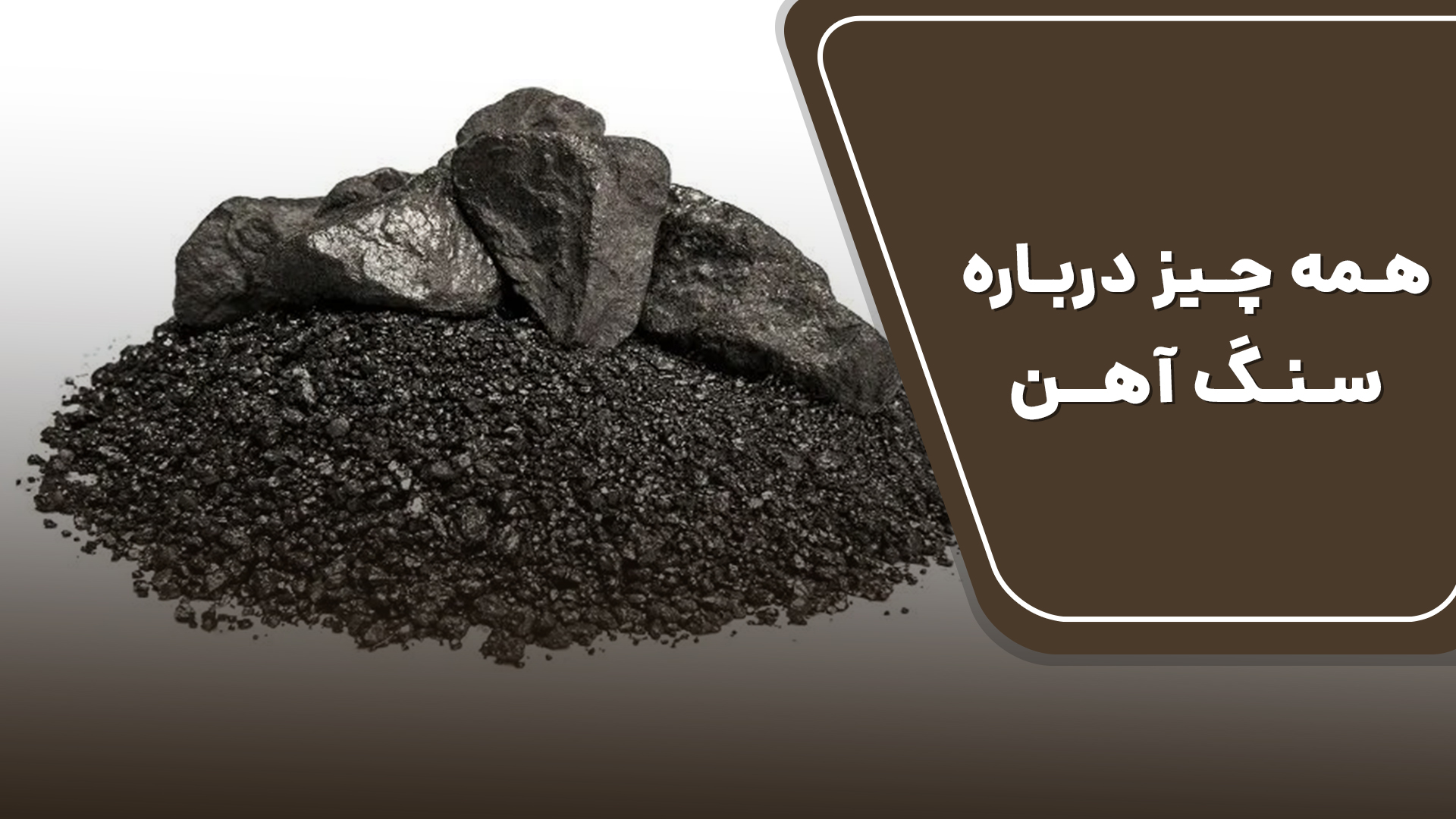
Iron ore is the primary raw material in the steelmaking industry and forms the foundation of the steel value chain. The quality of iron ore directly impacts production efficiency, energy consumption, final product quality, and overall operating costs.At our company, iron ore sourcing and processing are carried out with a strong focus on stringent quality standards and maximum operational efficiency, ensuring a stable and reliable feedstock supply for sustainable steel production. The Role of Iron Ore in Steel ProductionAfter extraction, iron ore undergoes crushing, grinding, and beneficiation processes to produce iron ore concentrate. This concentrate is subsequently processed in: Pelletizing plants, where concentrate is agglomerated into iron ore pellets for use in ironmaking processes.Or, in certain cases, through agglomeration and sintering processes to produce sinter feed suitable for blast furnace operations.where it is prepared as feed material for blast furnace (BF) operations or direct reduction (DR) units.In the steel production route, iron ore is converted into metallic iron through two primary process pathways:Blast Furnace (BF) – producing molten hot metal (pig iron) for subsequent steelmaking operations.Direct Reduction (DR) – producing sponge iron, also known as Direct Reduced Iron (DRI), as a solid metallic feedstock for electric steelmaking The Importance of Iron Ore in the Sustainable Development of the Steel IndustryIn light of global efforts to reduce carbon emissions, optimizing iron ore quality and enhancing process efficiency play a critical role in lowering energy consumption and improving the environmental performance of steel production operations.Investment in advanced beneficiation technologies and responsible mineral resource management is essential to ensuring a sustainable future for the steel industry.
مطالعه

Steel Ingot

A steel ingot is the first product obtained from iron ore through steelmaking processes and is produced in the form of rectangular blocks with dimensions suitable for handling and transportation. The length of an ingot is typically more than 2 meters, and it is produced as a solid metal. This type of ingot is among the most widely used semi-finished steel products in the world and is available in various forms. An important aspect of steel ingots is their shape and size, which play a crucial role in subsequent forming processes. Another important factor is the casting method and the solidification of molten steel in molds, as these determine the physical and mechanical properties of the product. In large steel industries, ingots are classified into blooms, billets, and slabs, each with different dimensions and characteristics used for producing specific steel products. Bloom A semi-finished steel product with a large square or rectangular cross-section, used for producing heavy steel sections. BilletA semi-finished steel product with a smaller square cross-section, used for the production of rebars and wire rods. Slab A semi-finished steel product with a wide , flat rectangular cross-section, used for the production of steel plates and coils.
مطالعه

Slab

Steel Slab A slab (also called flat slab) has a rectangular shape with a width of about 1.25 meters, a length of around 12 meters, and a thickness of approximately 230 millimeters. This product is usually produced directly by the continuous casting process or indirectly through hot rolling of other types of steel ingots.The thickness of slabs is relatively low, to the extent that cutting operations can sometimes be difficult; therefore, advanced cutting equipment with high capabilities is required.Application of SlabSlabs are used in the production of flat steel products such as plates, sheets, and coils, as well as in heavy machinery manufacturing.
مطالعه

Bloom

Steel Bloom A bloom is one of the types of steel ingots, also known as a billet bar, and when molten steel is produced from raw materials, it is cast into bloom molds.This product has a width of more than 15 cm and a cross-sectional size larger than that of a billet (i.e., greater than 23 cm). Blooms are mainly used for the production of industrial rebars and are also applied in manufacturing products such as structural profiles , I-beams, channels, and similar sections. Steel blooms are produced in different sizes in steel plants. After solidification, the blooms undergo a cooling stage and are then transferred to rolling mills. In the rolling mill, the blooms enter the rolling line and are plastically deformed. Finally, various finished steel products are produced from these blooms.
مطالعه

Billet

Steel Billet A billet , also known as a “shamshal,” is one of the types of steel ingots with a long length and a square or round cross-section. The width of a billet is about 15 cm and its cross-sectional size is approximately 230 cm². It is commonly used for producing products such as reinforcing bars (rebars) and various types of wire rods. Billets are produced by direct casting, extrusion, or by rolling larger ingots. They are manufactured in different grades such as 3SP and 5SP. Grade 5SP billets are usually used for rebar production , while grade 3SP billets are used for manufacturing I-beams and angle sections.
مطالعه

Steel

Reliable steel , reliable structure. Fast supply of rebar , beams , sheets and pellets with standard quality and competitive prices. Profile A steel profile is any longitudinal section made of steel that has a specific geometric shape. Steel beam A steel profile with an I or H cross section that is used in structures to bear loads. Iron ore The main mineral for producing raw iron is iron ore, which is extracted from the earth. Rebar A steel bar, either ribbed or plain , used to increase the tensile strength of concrete in construction. Steel Sheet A flat and thin steel product with various thicknesses , used in different industries. Channel A steel profile with a C-shaped cross-section , used in structural works and machinery. Angle A steel profile with an L-shaped cross-section , used for connecting components and reinforcing structures. Steel Ingot A semi-finished steel product with a square or rectangular shape , used for manufacturing final steel products. Sponge Iron and Pellets Pellets are compacted iron ore powder , and sponge iron is the porous iron produced from their direct reduction.
مطالعه

Rebar

Rebar is a steel profile used in construction that is produced with a circular and flat cross-section. Of course, there are other types of rebar, which differ in material and application. However , rebar is generally used in the construction industry. This profile is produced in different thicknesses and diameters , each of which has a specific application. Rebar TypesRebars are generally divided into two categories: ribbed and plain , and in the general category they can be divided as follows:European rebar (carbon, manganese, silicon, alloy, etc.)Carbon steel ("black" base rebar)Epoxy coatedFiberglass , polymer , and anti-corrosionGalvanized Plain wire coil Suitable for wiring and light industries Deformed (ribbed) wire coil Suitable for producing welded mesh and precast components Plain rebar A smooth steel bar without ribs , mainly used for reinforcement , making stirrups , and industrial applications. Deformed rebar Suitable for heavy concrete structuresProvides high bond strength with concrete
مطالعه